2006 Davis Cup Final: I could have predicted that!


In my Davis Cup preview, I had David Nalbandian flying into Moscow with his James Bond gizmo jet pack doing his best to steal a Davis Cup for Argentina. I predicted that Nalbandian was unlikely to get much help from his teammates but I left out an important piece of information – a particularly bad omission considering that I’m the resident fantasy tennis stats geek: Juan-Ignacio Chela had a 5-0 record over Russian Nikolay Davydenko with two of those wins on hard court.

As of today, that record is 5-1. Davydenko beat Chela 6-1, 6-2, 5-7, 6-4, in the first match of the Davis Cup final to put Russia up 1-0. When I saw that result and realized that I hadn’t bothered to look up their head-to-head record I thought to myself, hmmm, 5-0, that’s a nice record but none of those wins were on carpet, were they now? I decided, after the fact, that I still would have picked Davydenko to win the match.

I think the phenomenon may be related to “Monday morning quarterbacking”. The Free Dictionary defines a Monday morning quarterback as “One who criticizes or passes judgment from a position of hindsight.” After the 9/11 disaster, citizens in the U.S. understandably wanted to believe that if they went back in time and looked at the intelligence the government had before 9/11, they could have predicted the actions that led to airplanes flying into buildings and so the government should have known what was going to happen.

New Yorker magazine addressed this issue shortly after 9/11 and cited an interesting study. If you ask a person to predict the result of an event before it happens then ask again after the event has occurred, people will change their prediction to make it closer to the actual result. If you had asked me whether I thought comedian Michael Richards would follow in Mel Gibson’s footsteps and explode in a racist tirade I would have said, “Wait a minute, that’s the guy who played Kramer on Seinfeld, right? He’s not that dumb, how could anyone be that dumb?” If you showed me the youtube video of his outburst, I might have said something like, “You know, I thought there was something funny about him. Looked to me like he had a lot of anger issues underneath all that goofiness.”

In actuality, predicting terrorist acts is more like finding a needle in a haystack but hindsight narrowed down the possibilities to the point where the outcome was obvious. Maybe I would have chosen Davydenko anyway, who knows, but Clive White, journalist for The Sunday Telegraph, had a more realistic position on the matter. When he was asked to predict the outcome of the Davydenko/Chela match he said:

You’ve got a guy ranked number thirty-three in the world against number three. It should be a formality for the higher ranked player, Davydenko, and yet he’s lost all five matches against Chela. It’s impossible to call.

Same thing for the second match today. David Nalbandian had a 2-6 record against Marat Safin and yet he beat Safin rather easily, 6-4, 6-4, 6-4. The only thing we could have safely predicted is the quality of David Nalbandian’s singing voice: pretty bad. Click on the video above and find out for yourself.

See also: 2006 Davis Cup: From Russia With Love

2006 Davis Cup: From Russia with Love

If Argentina wants to win the Davis Cup title this weekend, David Nalbandian will have to jet pack into the Kremlin and steal it away.

If you prefer Sean Connery to the current version of James Bond, one Mr. Daniel Craig, you could rent a DVD of the movie From Russia With Love, but you could also load up your Gamecube and experience the video version of the adventure. You can see a screen shot of the game here. Evidently Bond is using his jet pack to whiz past – or escape from? – the Kremlin.

If I’m not mistaken, please correct me if I’m wrong, Bond used the jet pack in Thunderball, not From Russia With Love. Not that I’d know. I walked out of my last James Bond movie, somewhere around Octopussy, in a feminist snit. I was sick and tired of every woman in the movie appearing in a bikini. If you’re poolside, o.k., I understand that, but what woman lounges around her living room in a bikini? Again, correct me if I’m wrong. Maybe you lounge around your living room in a bikini.

If Argentina wants to win the Davis Cup title this weekend, David Nalbandian will have to jet pack into the Kremlin and steal it away. His teammates are capable players, the lowest ranked is Juan Ignacio Chela and he’s at number 33, but the Russians chose carpet for a reason.

Even though I’ve been diligently filling out fantasy tennis draws all year, I failed to notice that Agustin Calleri had made his way to the top 30; he now resides at number 29. Still, he’s 0-2 on carpet this year. This is the first year that Chela has won a match on carpet. He’s 3-9 lifetime and Jose Acasuso isn’t much better at 5-8. Nalbandian, of course, is princely on carpet. Next to Roger Federer, I can’t think of a player who has such an exceptional record on all surfaces. Even on grass he has a 17-5 record.

Nalbandian finished the year at number 8, low for him, and it looks like he had a down year. Then you look at his record and you see this: semifinals Tennis Masters Cup, semifinals Madrid, semifinals Roland Garros, semifinals Rome, semifinals Miami and…semifinals Australian Open. Nalbandian was very upset at the Tennis Masters Cup in Shanghai because his nine year old cousin, his godson, was killed in an elevator accident. It’s hard to know how this will affect him and it could be important because this victory will rise or fall on his racket.

As for the Russians, Davydenko won two tournaments this fall on carpet and one of them was in Moscow where his Davis Cup teammate, Marat Safin, was his opponent. Mikhail Youzhny peaked at the US Open making it all the way to the semifinals but it looks like that was a fluke. Dmirty Tursunov took a hard court title at Mumbai this fall but he also lost three straight times in the first round. He played a challenger in the Ukraine two weeks ago no doubt to build up some confidence.

If Nalbandian can win both of his singles matches, anything is possible. Nalbandian has a 4-2 record against Davydenko and he has a 10-2 record in Davis Cup singles, which is also exceptional. But he’s 2-6 against Safin and one of those two Davis Cup losses was to Safin.

The match is in Moscow, not Buenos Aires, and it looks like it’s a bit too much for Argentina. Nalbandian will win one of his singles matches but Russia will take its second Davis Cup title.

See also: Davis Cup: Tursunov Vs. Roddick

Top Ten Moments From Men’s Tennis

Now that the men’s year-end championship has concluded from Shanghai, we can look back and hopefully savor the year in our sport and find those moments that held special appeal for us. This is not to suggest that they are all pure moments of wonderful tennis, but rather events that tugged at our memories as we look back over the year. We’ll start with Number 10 and count down to the favorite moment.

Number 10
Roger Federer takes the Australian Open. The year commenced with Federer’s first of three Grand Slam titles, this one down under over a field that unhappily was not as strong as it could have been. Nadal was made for this surface so people said, but he had a foot injury and did not play. Fortunately, Roger was as strong as he needed to be, beating new kid on the block Marcos Baghdatis in four sets.

Number 9
“I challenge” was the new call heard on tennis courts around the world when summer started, as both tours introduced the new Hawkeye electronic line calling system. What took you guys so long? So far it has gone well, adding some soothing calm to the furrowed brows we were seeing after so many bad calls. Finally an innovation we all could applaud, and did. And we’ll overlook the fact that it took them forever to get this system up and going.

Number 8
Andre Agassi retires. So much was made of this when the day finally arrived for Andre at the US Open, and then it seemed the waters closed over him just as quickly and it was all gone. We wanted him to have a deeper run, I personally wished he had done this a year ago, at the Open, when he was still reasonably healthy and could go out on a higher note. But the body was too far gone this season and it was not to be. Fortunately in terms of this column, the man who beat him, Benjamin Becker, was “discovered” by my co-writer playing the challenger events earlier in the year, so we are both quite happy to see him having an excellent first year on tour.

Number 7
Nikolay Davydenko of the Ukraine gets our Worker Bee Award. The guy won a ton of matches everywhere on all surfaces, so we should probably add The Healthiest Player Award along with The Most Consistent Player of the year.

Number 6
Roger Federer tries to play back to back Master Series events (Toronto and Cincinnati) but gets his bell rung in the second round of Cincy against Andy Murray. Unfortunately Murray probably can’t clutch this win too proudly to his chest, his play over the year varied from God awful lackluster performances to smooth and polished ones. Let’s term this upset a prime sample of how even the mighty grow weary.

Number 5
Blake over Nadal in straight sets in Shanghai. Rafael Nadal has three good reasons now to avoid James Blake, Blake rang his bell on all three occasions they met this season. The last time was at the year-end championships, where Blake made an impressive run including this beautiful two-set masterpiece which we thought was the best highlight for American men’s tennis this year.

Number 4
The brilliance of Rafael Nadal on clay. A blitzkrieg run through the spring, taking out Federer in Monte Carlo, Rome and then at Roland Garros. Roger no doubt was seeing red in his dreams after that season, and we all thought, “Finally, here is the lad to challenge Roger.” Well, didn’t quite work out that way, but Nadal broke a venerated record, Vilas’ 53 winning streak on clay, with his own 62 match wins.

Number 3
Roger Federer takes his fourth Wimbledon in a row. That Swiss guy again, and with some particularly sweet revenge over his springtime nemesis Nadal. No one expected Nadal to even be there in the final, and he acquitted himself very well. But it was a strange match, and even though Roger won in four, it left us with a feeling of things being unsettled between Number One and Number Two in the world.

Number 2
The Rivalry That Sputtered. The second half of the season basically saw Roger riding off into the sunset. He would not meet Nadal again until the last event of the year, even though they played several tournaments together. Nadal became spotty in his play, losing to an odd assortment of players and none of them named Roger. The first half of the year the raging debate among tennis aficionados was, Is Nadal In Roger’s Head? The second half became, Is Nadal Afraid of Roger?

Number 1
A screaming forehand cross court winner. The shot of the year from somewhere near the front row seats. It’s that Federer lad again, this time in Shanghai. Against Nadal and on match point. Roger basically kissed the field goodbye with that shot, capping one of the most impressive years ever in men’s tennis. Three slam wins, the final of the fourth, the year-end title and a sprinkling of Masters Series wins along the way. Nadal never knew what hit him, frankly neither did we. An awesome point that encapsulated Federer’s year perfectly, and probably has the rest of the field wondering if they should even bother showing up in ’07. We hope they do. But it probably won’t matter.

Read more about Benjamin Becker here

Tennis popularity and fantasy sports

could fantasy tennis increase the popularity of the professional tennis tour?


For most professional tennis players, the short off-season is finally here. For the top Russian and Argentine players, the season won’t be over until December 3 when the Davis Cup champion is crowned.

That leaves less than a month for an off-season. We all know this is ridiculous and the ATP and WTA are starting to weed out tournaments in an effort to pare down the yearly schedule. Unfortunately, given the popularity of tennis in the U.S., that means tournaments in my resident state of California are likely to disappear. The WTA tournament in San Diego is already gone after 2007 and the WTA tournament at Stanford is a Tier II tournament which leaves it in a precarious position.

While tennis is struggling, baseball is booming and fantasy baseball has no small part in that. In my off-season, I’m going to look at a few aspects of fantasy tennis and see what it may hold for us.

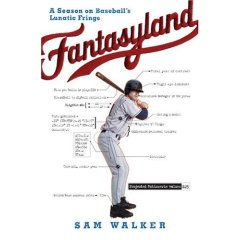
Let’s start by looking at a book called Fantasyland by Sam Walker. Walker is a baseball columnist for The Wall Street Journal who took a sabbatical to try and win the most prestigious fantasy league title in the country, Tout Wars, a league whose membership is limited to fantasy baseball experts.

Since Walker is a baseball journalist he figured he had an advantage over his Tout Wars opponents because he had direct access to baseball players and team management. If you ever doubted the fanaticism of fantasy players, consider this: on at least three occasions he tried to influence the manager of a real baseball team to make a decision that would help the statistics of a player on his made-up fantasy team.

It wasn’t as warped as it sounds. Walker told the manager of the Detroit Tigers that one of his pitchers, who is diabetic, experienced a drop in performance when his pitch count regularly went over 100. What helped the Tigers also helped Walker’s team. Imagine me using my position as a tennis journalist to corner Marat Safin’s coach and slip him the name of a Freudian analyst just because I have Safin on my fantasy team. Yes, it would help the notorious headcase that is Safin, but my motivation is totally self-serving.

How much has the fantasy baseball increased the popularity of the real game? More importantly for our purposes: could fantasy tennis increase the popularity of the professional tennis tour?

Major League Baseball is flush at the moment. They have a new $3 billion dollar television deal, the Chicago Cubs just gave $145 million to Alfonso Soriano and a low level minor league team sold for $24 million. And this is just one year after the Balco scandal uncovered widespread steroid use and a season where there are very few notable stars.

Sports has historically been driven by superstars but the fantasy game is different. Everybody knows who the stars are but when you have a fantasy team, you also become very familiar with the scrubs. At the end of a fantasy baseball draft you have very little funny money left so you have to find the good $1 players. In the ATP fantasy tennis game, you can only use a player five times per season. You’d better be familiar with the clay court players ranked in the lower part of the top 100 else you’ll miss out on the interminable European clay court season.

who wants to sit on your couch passively when you could sit on your couch and play the game?

Whereas before you logged on to the Talk Tennis forums only for grand slams andMasters Series tournaments, now you check the live scores online and look at your fantasy team ranking many times a day. Those are your players out there! As Walker put it, “…the trouble with this insidious game is that once you’ve played it, every other form of fandom is a pale substitute.”

Yahhoo Sports estimates that there are 16 million fantasy baseball players. That’s about 20% of the total attendance at baseball games last year. That’s a huge number and explains the massive online advertising income from web traffic as players track teams’ statistics and visit fantasy helper sites. The ATP fantasy tennis team had 14,000 players. Not in the same class at all but fantasy baseball started around 1980 whereas fantasy tennis games are only a few years old.

Books with baseball statistical models have been around for years. The only sites that analyzed tennis matches were betting sites. But this year, Tennis Insight, a site with ample tennis statistics and a statistical model for predicting winners, launched. You can also get historical statistics at ATP Tennis and match results by court surface at Tennis Match-Stats.

You could say that fantasy tennis isn’t as warped as other fantasy sports because, unlike fantasy baseball, your fantasy team is not made up of players from different teams. You won’t find yourself at a ballpark cheering for the catcher on one team and the pitcher on the other because they’re both on your fantasy team. In tennis, you’re rooting for one player against another.

Many adolescents already spend their time playing an NBA video game instead of watching the real thing; who wants to sit on your couch passively when you could sit on your couch and play the game? And baseball fantasy players are outnumbered by fantasy football players. Tennis has been slow to catch on but the world of interactivity is here and it’s had a real effect on the popularity of the live version of the sport.

I don‘t think it’ll take 25 years to see the effects so check back in a few years and I think you’ll see that ATP fantasy tennis isn’t the only game in town.

The WTA Gets A Grip

You have to laugh out loud when you read about the new changes for the WTA tour and why they were chosen. Particularly the item about allowing on court coaching. As you may know, they experimented with this near the end of the year. The powers that be in the WTA, whose members are mostly male by the way, appear ready to decree that on-court coaching is good, it adds to the fan base. They are thinking of allowing it from the stands as well.

Here’s how the announcement went: “In light of the positive feedback from fans, broadcasters and others, and in recognition of the difficulty in policing coaching from the stands, the Tour also intends to put forth a proposal in the coming months to legalize coaching from the stands, subject to important parameters that would ensure no disruption or interference with play.”

Hmm, this sounds suspiciously like they’re saying, we all know that illegal coaching from the stands goes on all the time and even though we tried….God knows, we TRIED, we just couldn’t…do anything about it, (and that whole thing with Maria and the hand signals from her father and the banana…well, we just can’t endure getting laughed at again), so…well…we’re throwing up our hands and saying, let’s make it LEGAL!

What a novel idea, we must say. There’s a tasty little pastry of ideas and changes the Tour brass are playing with. I hesitate to call it a waffle just yet, let’s see how it plays out. Changes that would shorten the season and ensure that the top players show up for tournaments they commit to.

Its a risky proposition these days to buy a ticket to a tennis event – especially if it is a smaller one – where the chances are good the player you bought that ticket to see pulls out due to whatever. There have been lots of whatevers this year so now the tour will reduce the commitment players must make from playing at least 13 tournaments down to 11. There’s even some thought about combining men’s and women’s events, which would be nice I suppose, but I don’t seem to have a strong opinion on that one. I do, though, on this proposed on-court coaching thing, an idea which should be strangled quickly, before it hatches.

Yesterday I spoke with my collaborator Nina Rota, and was surprised to hear she feels quite the opposite. For her the change would be good for the game. It would be more fun to watch a real contest rather than one where the player getting her butt kicked hasn’t a clue how to correct it. A bit of legalized coaching might overcome that. The player could make the adjustment and put on a better show.

I say, yes, go for the better show, but on your own.

Actually, a goodly number of people around tennis have spoken out against the on-court coaching. The gist of their arguments is that it’s SINGLES, for heaven’s sake. Just you and your internal clock that should be telling you when to eat, what to eat, when to challenge a call, and what strategy you should be adding to or subtracting from on court.

Besides, do you really want to see your mother out on court? Assuming she is your coach. Considering what some of the young players endure at the hands of tennis parents, maybe being on court is a nice break from family togetherness. Tennis is so much a game about what goes on between the ears, why tinker with that? That’s why I have a bug up my wazoo about this.

Earlier in the year there was that moment when Roger Federer showed he was human after all. He got testy with Tony Nadal coaching Rafa from the stands in Rome. He took it as more than just a personal affront, it was an affront to the sport. Roger is a purist, the way he is about using a 90cm faced racquet. Other top players including Amelie Mauresmo and Maria Sharapova also had a negative response to the idea of coaching. Even Sharapova, of all people, holder of the most egregiously bad example of illegal coaching this season.

When the WTA refers to the “positive feedback from fans, broadcasters and others,” I noticed that no mention was made of the guys and girls at the heart of the matter, the players. Unless they are included in the “others” category. I haven’t seen an official survey yet but it’s probably true that the closer you get to the top of the rankings heap, the less the players like the coaching idea. They’ve already figured out how to coach themselves; you should too.

This could be a point where we segue into the notion that tennis is an elitist sport and that is what compels us, so why fool around with that? But this will be a whole other can of worms to be opened later, during the time of Off-Season Appeasement, when we’ll need a few good battle royales to keep us warm and happy.

The Tour board members call their plan RoadMap 2010. Lately it’s been pushed up a year. RoadMap 2009. Do I hear a 2008? Their eagerness is staggering. Let’s hope we’re not on the highway to hell.

To read more about rule changes go to 2006 WTA Championships: Last One Standing